Humanitarian Workers: An Endangered Species?

Anna Cope

September 6, 2014

11 min
 Humanitarian workers are becoming an endangered species because of the work we do, and how it affects us. On the 19th August 2014, World Humanitarian Day celebrated humanitarian personnel and those who have lost their lives working for humanitarian causes. "One death is one too many".
What puts humanitarian relief on the endangered list is also the increasing stress levels and  high turn-over rates. Initial idealism is replaced by self-defensive behavior that burns us out earlier than ever before.
This post looks at how humanitarian workers can use employee support, self-protection, and wellness programs.
We mourn the dead and honor their service. As a community, we also ought to consider the ones that leave humanitarian work too early because of the toll it takes. They are also lost to a humanitarian community that needs them more than ever. How can we 'do good' if we don't feel good?
Tip: Join our mailing list to get tips how to feel, be and do good: Learn More
Humanitarian Workers: Navigation Without Map
 The world was once a relatively easy place to navigate when wanting to 'do good'. Now the complexities of humanitarian work can literally kill you - either from external violence or internal forces that lead to stress, burn out, and poor lifestyle choices.
Humanitarian workers come from all over the world to fight for a better world, with the hope that the actions they do make a difference.
The wish to 'do good' in an increasingly complex world makes this a difficult career choice. Many aid workers leave early. While the reasons are understandable, the ultimate losers are the hungry; the refugees; the sick; those displaced by the ravages of civil strife, war, and natural disasters.
Humanitarian Work: External Violence
Before you could count on some protection from the flags and emblems of UN and Non-Governmental organizations. Not so today. The world has become a far more unstable  working place. The Humanitarian community was relatively 'safe' and respected as neutral providers of aid and relief before. Now Humanitarian workers get exposed to dangers which are far beyond their job descriptions. Aid worker exposure and death from terrorism, kidnapping, disease, and crossfire is common place - in far greater numbers than before. As reported by humanitarianoutcomes.org: 2013 set a new record for violence against civilian aid operations, with 251 separate attacks affecting 460 aid workers. The spike in attacks in 2013 was driven by escalating conflicts and deterioration of governance in countries like Syria and South Sudan. The numbers are escalating — if you click on the 'info graphic on violence against aid workers' — you get a clear picture of the trend.
Humanitarian Work: Internal Forces
The stress levels are higher than ever. This job requires dedication, and belief that what you do matters. However, this can also be turned against you once you are in the job. You have no arguments left when feeling drained, tired, lost or stressed. The hungry poor, and war ravaged communities are in a far worse situation, right?
 'Survival of the fittest' is not necessarily related to your health or actual fitness levels — but rather how you are able to surf in the rather shark infested political waters that the UN and NGOs have become. You need thick skin, and a clear head to navigate in the power corridors these days.
The reality of field work, in a complex asymmetric world, makes humanitarian interventions hard at best. Personal security and common sense get put in the back pocket as the humanitarian community struggles to get access to populations in need. 
Risks are greater and the internal pressures to do the job makes for difficult choices. Despite investment in greater safety and security, the managers at field level are placed in often impossible situations where the mission counts higher than the staff within it. The burn out rates increase as a result, and the talent and specialists leave.
Humanitarian Work: Self Destruct Mode
Wellness programs are not yet high on the agenda within international aid agencies, although this is becoming more talked about. Some agencies are making head way — while others lag sorely behind.
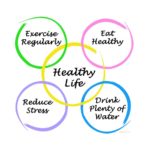 The simple truth is that to 'do good' you also need to 'be good' to yourself, and 'feel good' inside. You need to eat, exercise, rest and allow a distance between work and personal life. ( This blog is the culmination of a career in humanitarian work, and how lifestyle changes really are key to wellness in order to serve others - Follow The GOODista for updates.)
Induction into the humanitarian work is key, and nothing replaces field experience. A thorough brief, common sense, and wellness programs that actually teach you why it is essential to look after yourself, as well as the populations you serve, is a good start. If you are able to tackle stress levels that lead to burnout you are on a winning path.
 The endangered humanitarian worker is someone who has reached harmful stress levels and thus tends to have a reduced awareness of changes in security situation - leading to a greater acceptance of unnecessary risk.
Lifestyle changes have little to do with flaky diets and makeup. Humanitarian healthy lifestyle changes have everything to do with survival and ability to actually 'do good' without harming oneself in the process. Are your signals telling you that you need to re-think?
Humanitarian Aid Worker: Reality Check
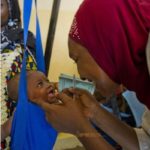 To become a humanitarian aid worker you need skill, knowledge in a specialist area, languages, dedication, and belief that what you do makes a difference - even when you are based in a Head Quarters location. Tip: Career Coaching
It can be the most rewarding job ever and allow you to expand your horizons thousandfold, as well as learn and see things you never ever thought possible.
Humanitarian Work/Life Balance
Keeping a healthy distance between work and personal life will become more important as the months, years, countries and reassignments roll on - yet in itself, it also creates complex webs on the relationship front.
As idealism matures into varying degrees of realism, the lifestyle choices of Humanitarian workers also tend to get worse. Late nights, back-to-back missions, family separations  and low priority to regular fitness, proper nutrition and rest take their toll.
The increasing ill-health of Humanitarian workers are not only because of the diseases you can contract when traveling. The slow ongoing downward slope of bad lifestyle choices pile on the kilos, promotes addiction, and attracts health issues that may lead to early retirement or loss of life.
The earlier one realizes that making preventative health choices — the better you are likely to perform, and be fit for purpose: Feel Good, Be Good and Do Good.
Humanitarian Workers: Finding a Compass
The above sounds sad at best - but is regretfully also a reality. Humanitarian work is hard - and becomes no easier as external violence grows, and internal forces act as a pressure cooker.
You may not be able to control the external or internal world. You can control the lifestyle choices you make, and make a difference for yourself and others by doing so.
7 Healthier Humanitarian Tips
 Prepare for your mission. Make sure you consult organization briefs about the country, get medical advice, and get you vaccinations in order. Pack essential mosquito nets, health supplements and 'proper' clothes/gear.
 Commit to exercise 30 minutes a day. Walking, Swimming, Weights or Yoga - whatever makes you tick. As long as you move every day.
- Eat as healthily as you can. Missions,
 emergencies and relief work does not make it easy - but you can make deliberate choices to avoid the pastries, sugars, processed foods to a larger extent. Bring with you dried fruits, nuts, and seeds. Learn more about what food groups you need to eat from to get a balanced diet - and keep it simple. Don't complicate your life, but make healthier food choices as and when you can.
 - Drink less alcohol. This is a biggie in the humanitarian world, as many drink far more than they should.
 Sticking to a 'max 2 units/night' can be a starting point and a challenge for many. Bottled water, fruit juice, and tea are better for you (you know that!). The root of your stress levels does not get dealt with by over-taxing your liver - rather the opposite. 6 - 8 glasses of H2O / day keeps you hydrated and makes you feel so much better.
 - Practice mindfulness techniques. This helps you to
 appreciate what is good in a given moment, and counter acts stress. It has made some real difference for many, and is not as weird and hippie as it may sound to start off with 🙂
 - Rest, sleep and invest in your R & R to really take time out. As hard as it can be to come down from the adrenaline high - and actually find release in being able to sleep - allowing
 yourself to push stop is important. Finding a way to induce sleep naturally is not given, but as you know alcohol and self-prescription drugs are counter productive. Better, in this case, to try to cat-nap when you can and mentally allowing yourself to 'turn off' can be a way forward.
 - Take care of your relationships as working (far) away has its special domestic challenges also for the partner. Tip: Read How Working Away Relationships Can Be Partnerships
Humanitarian Wellness
All these tips are easy to write, and not so easy to do when you are in the midst of a humanitarian crisis. No-one will thank you for trying to be good to yourself. The cowboy mentality of many aid workers is still well alive. However, a clean body and mind can be the difference between life and death.
As time goes by, the fact that time waits for no-one is probably the one truth that has never before become so acute as now.  Humanitarian workers are an endangered species - the world is far more complex, and dangerous than ever.
The internal forces within the UN, NGOs, and Contractors drive up the stress. In the name of self-preservation, common sense and self-defense - how about taking control of what you can: Investment in a healthier lifestyle to do the most unpredictable of jobs possible. Tip: Wellness and/or Career Coaching
What would make it easier for you to make better lifestyle choices as a Humanitarian Worker?
Recommended and Related:
- World Humanitarian Day - Protection of Humanitarian Workers - ICRC
- Trauma and the Humanitarian Aid Worker - Psychology Today
- Field Mission Dilemma: Choice and Access - thegoodista.com/
- Why Staff Support in Humanitarian Organisations? - Antares Foundation
- The Psychological Health of Relief Workers: Some Practical Suggestions - Humanitarian Practice Network
- Humanitarian Aid Worker Traveller's Health - CDC
- Field Mission Dilemma: Fit for Purpose - The GOODista
- A Professional Aid Worker Blog - AidSpeak.wordpress.com

Share This Article


About the Author

Anna Cope
Executive & Career Coach
Accredited coach specializing in career transitions for international professionals.